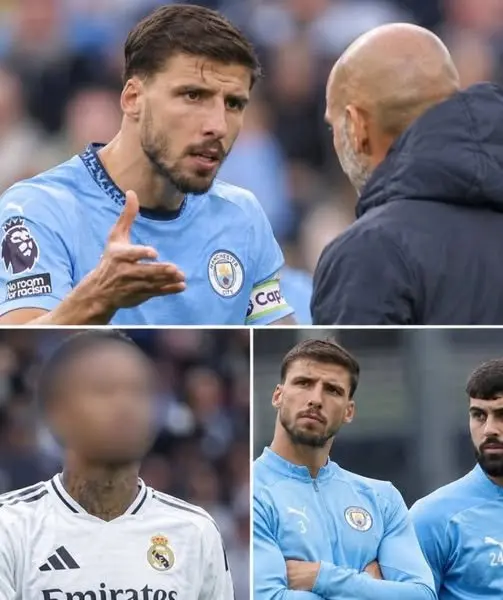
Manchester City’s defensive problems have taken another dramatic turn after Rúben Dias approached the club’s hierarchy with a special request ahead of the January transfer window. The Portuguese international believes significant changes are necessary to restore stability to City’s back line, but the identity of the defender he wants alongside him has raised eyebrows throughout the club.
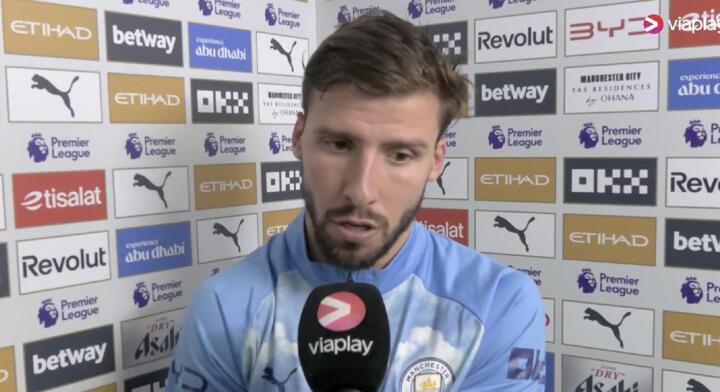
Dias has identified Real Madrid centre-back Éder Militão as the player capable of transforming Manchester City’s defensive structure and restoring the confidence that has been missing in recent performances.
Dias grows increasingly frustrated with Manchester City’s defensive problems
Manchester City’s disappointing run of performances has exposed weaknesses in a defensive unit that was once considered among the strongest in European football.
The humiliating 3–1 defeat to Nottingham Forest highlighted several recurring problems, including poor communication, inconsistent positioning and an inability to contain rapid counterattacks.
Rúben Dias has become increasingly concerned about the lack of stability at the heart of City’s defence.
The Portuguese international believes the frequent changes to defensive partnerships and tactical responsibilities have prevented the team from establishing the understanding necessary to compete consistently at the highest level.
Although Dias accepts responsibility for his own mistakes, he believes the problems extend beyond individual performances.
His growing frustration eventually prompted him to approach Manchester City’s hierarchy ahead of the January transfer window.
A special request behind closed doors

During discussions concerning the club’s future direction, Dias raised concerns about the defensive structure being implemented under Enzo Maresca.
The centre-back believes Manchester City need a defender capable of operating comfortably in a high defensive line while possessing the recovery speed necessary to deal with quick opposition attacks.
City’s possession-based approach frequently requires their defenders to cover enormous spaces when the team loses the ball.
Dias excels at organising defensive units, winning physical battles and anticipating opposition movements.
However, he believes those qualities would be significantly enhanced by playing alongside a centre-back with exceptional acceleration and recovery speed.
Rather than requesting a general defensive reinforcement, Dias identified a specific player he believes possesses the ideal combination of attributes.
That player is Éder Militão.
Why Dias wants Manchester City to sign Éder Militão
The Brazilian international possesses several qualities that could complement Dias’s defensive strengths.
Militão’s athleticism, recovery speed and ability to defend large spaces make him particularly suited to teams operating with an aggressive defensive line.
His experience at Real Madrid has also provided him with an understanding of the demands associated with competing for major domestic and European trophies.
Dias believes their contrasting qualities could create a more balanced defensive partnership.
While Dias concentrates on organisation, positioning and physical confrontations, Militão could provide additional protection against fast opposition attackers.
The Brazilian’s ability to cover wide areas would also offer greater security when Manchester City’s full-backs advance into attacking positions.
For Dias, the proposed signing is not simply about adding another prestigious name to the squad.
It is about addressing a specific tactical weakness that opponents have repeatedly attempted to exploit.
Militão’s previous serious knee injuries, however, would make any assessment of his fitness particularly important before City considered a substantial financial commitment.
The Nottingham Forest defeat exposed the missing defensive qualities
Manchester City’s defensive difficulties became particularly apparent against Nottingham Forest.
Whenever City lost possession in advanced positions, their defenders were frequently forced to retreat while attempting to contain opposition attackers moving at speed.
The problem became even more serious when one centre-back stepped forward to confront the player carrying possession, leaving additional space behind him.
Dias believes Manchester City require a defensive partnership capable of dealing with these situations without immediately becoming unbalanced.
A quicker centre-back could allow him to concentrate on organising the defensive line while providing protection against runs behind the defence.
Militão’s physical attributes therefore represent an attractive solution.
However, signing another defender would not automatically solve every problem.
Manchester City’s midfield positioning and defensive transitions would still require significant improvement.
What the request means for Gvardiol and Guéhi

Dias’s proposal has potentially significant implications for Joško Gvardiol and Marc Guéhi.
Both defenders offer valuable qualities, but the arrival of another high-profile centre-back would increase competition for starting positions considerably.
Gvardiol’s versatility could allow Maresca to use him more frequently on the left side of the defensive unit.
Guéhi, meanwhile, would face additional competition for a central defensive role.
The request also raises questions about whether Dias considers his existing partnerships capable of providing the long-term stability Manchester City require.
His preference for Militão is based on tactical compatibility rather than personal disagreements.
Nevertheless, the prospect of an established defender directly recommending a potential replacement for one of his teammates could create further tension inside an already competitive dressing room.
Enzo Maresca faces a difficult decision
For Maresca, Dias’s transfer recommendation presents both an opportunity and a challenge.
The manager understands the importance of improving Manchester City’s defensive transitions.
He also recognises that the team’s high defensive line requires defenders capable of responding quickly when possession is lost.
However, Maresca must consider whether recruiting another centre-back represents the most effective solution.
City already possess considerable defensive talent.
The manager could instead address the problem by introducing an additional holding midfielder, adjusting the positioning of his full-backs or reducing the distances between his defensive players.
There is also the question of managerial authority.
Although Dias’s experience makes his tactical observations valuable, recruitment decisions ultimately belong to the club’s hierarchy and coaching staff.
Maresca must balance the concerns of his senior players with the wider requirements of the squad.
Real Madrid would represent a major obstacle
Even if Manchester City decided to pursue Militão, completing a January transfer would be extremely complicated.
Real Madrid would need to assess the consequences of losing an experienced defender during the middle of the season.
Replacing a player of Militão’s quality would also present considerable challenges in a traditionally difficult transfer window.
Manchester City would consequently need to prepare for demanding negotiations, potentially involving a substantial transfer fee.
The Brazilian’s contract situation, physical condition and willingness to move would all influence the feasibility of any agreement.
Dias’s recommendation may provide the starting point for a recruitment discussion, but it does not guarantee that Manchester City will submit an offer or that Real Madrid will entertain negotiations.
Donnarumma could benefit from the proposed partnership
Another player who could benefit significantly from City’s defensive restructuring is Gianluigi Donnarumma.
The Italian goalkeeper has frequently found himself exposed when opposition attackers escape Manchester City’s defensive line.
A more balanced centre-back partnership could reduce the number of situations in which Donnarumma is forced to confront unmarked attackers.
Militão’s recovery speed, combined with Dias’s organisational abilities, could offer the goalkeeper greater protection.
However, the entire defensive unit would still need to operate collectively.
Clear communication, disciplined midfield positioning and coordinated pressing would remain essential.
Manchester City’s January transfer window becomes increasingly important
City’s upcoming recruitment decisions could determine how effectively the club responds to its defensive difficulties.
The hierarchy must decide whether the existing squad simply requires tactical adjustments or whether significant investment is necessary.
Dias’s intervention has brought renewed attention to the importance of defensive partnerships.
His recommendation reflects a belief that Manchester City need complementary players rather than simply accumulating individual talent.
The club must now consider whether Militão represents the right solution or whether other defenders could provide similar qualities at a more realistic cost.
The real identity of Dias’s preferred defensive partner
The most extraordinary aspect of Dias’s request is that he has identified one of European football’s most recognisable defenders as his preferred partner.
The player Rúben Dias wants Manchester City to pursue in the January transfer window is Real Madrid’s Brazilian centre-back Éder Militão.
Dias believes Militão’s recovery speed, athleticism and ability to defend large spaces could complement his own leadership, positioning and organisational strengths.
Together, they could provide the defensive balance Manchester City have been struggling to establish.
But the proposal also presents an uncomfortable dilemma for Enzo Maresca.
Should Manchester City invest heavily in another elite centre-back, or should the manager first demonstrate that he can correct the defensive weaknesses within his existing tactical system?
For Dias, the priority remains clear: restoring a defensive structure capable of supporting Manchester City’s ambitions.
And with the January transfer window approaching, the club’s response could have significant consequences for the future composition of its back line.