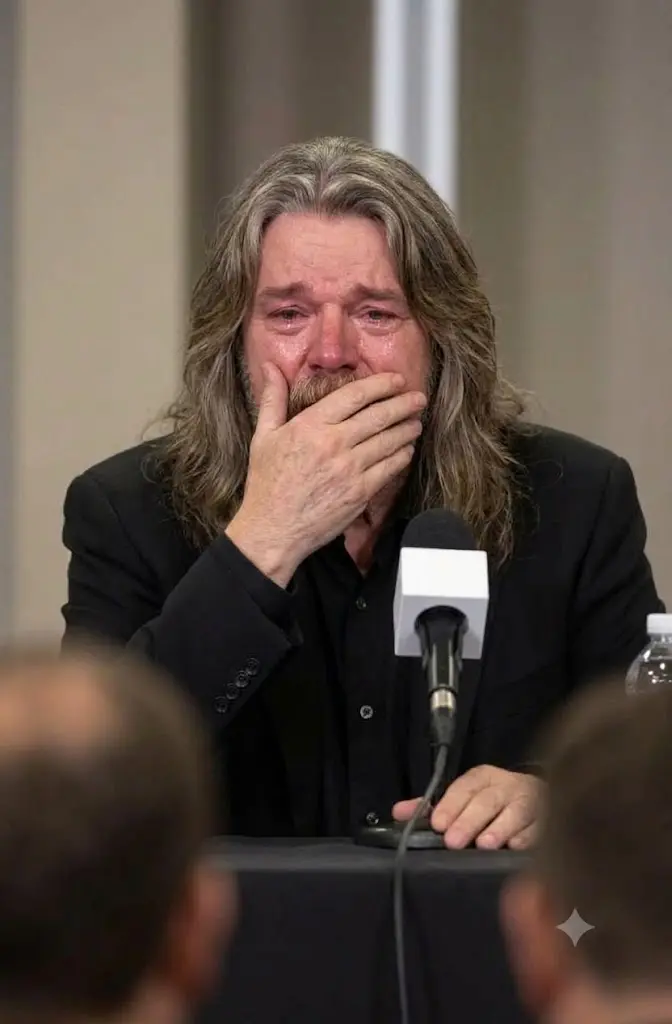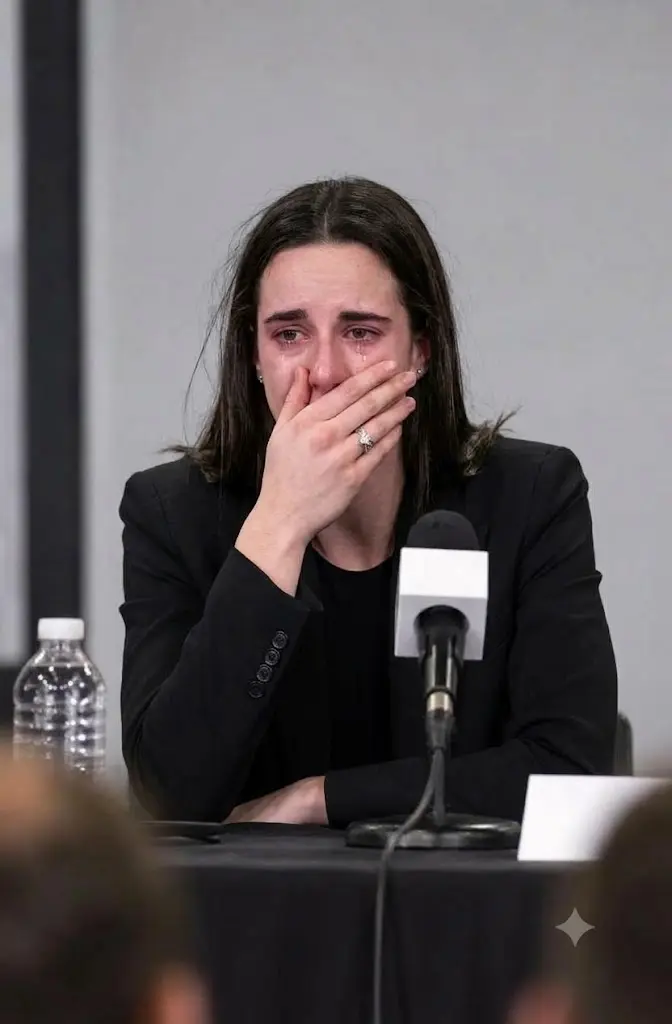
“OUR HEARTS ARE BROKEN!” 💔 Just 30 minutes ago, Caitlin Clark suddenly became the focus of an emotional story circulating across the basketball community, claiming the Indiana Fever superstar received heartbreaking news involving her family and personally confirmed the development. The dramatic wording has understandably alarmed supporters, particularly because Clark’s parents and brothers have been closely associated with the remarkable journey that took her from an Iowa basketball prodigy to one of the most recognizable athletes in women’s sports. But there is one crucial problem: the viral claim does not identify what supposedly happened, which member of Clark’s family is involved, or where Clark allegedly confirmed the news. Without a direct statement from Clark, her representatives, the Indiana Fever, her family, or credible reporting establishing a new tragedy, it would be irresponsible to invent a death, serious illness, accident, or emergency. What is established is that family has played an enormous role throughout Clark’s basketball life — making any alarming headline involving those closest to her especially emotional for fans. 😢❤️🏀
CAITLIN CLARK FANS ALARMED BY VIRAL “HEARTBREAKING FAMILY NEWS” — BUT ONE CRITICAL DETAIL REMAINS UNCONFIRMED
Few basketball players have experienced a transformation in public visibility quite like Caitlin Clark.
In only a few years, she went from an elite college prospect to a record-setting Iowa superstar, the No. 1 selection in the WNBA Draft, and the centerpiece of an extraordinary surge of attention around women’s basketball.
Millions have watched her hit impossibly deep three-pointers.
They have watched her celebrate with teammates.
They have watched her argue calls.
They have watched her win and lose on some of basketball's largest stages.
And through many of those moments, members of Clark’s family have been somewhere nearby.
That is precisely why a headline claiming she has received devastating family news immediately creates concern.
But before condolences become accepted as fact, there is a basic question that must be answered:
What exactly happened?
The viral claim does not say.
Clark was born in Des Moines, Iowa, in 2002 to Brent and Anne Nizzi-Clark.
She grew up in an athletic family alongside her brothers.
Sports were a normal part of life long before national television networks began building programming around her games.
Her competitive personality developed early.
Eventually basketball became the arena in which that competitiveness was impossible to ignore.
At Dowling Catholic High School, Clark emerged as one of the country’s most coveted young players.
Then came Iowa.
And everything changed.
Clark's college career became one of the defining stories in modern women's basketball.
Her extraordinary shooting range attracted casual viewers.
Her passing gave Iowa's offense another dimension.
Her emotional intensity created endless conversation.
But perhaps most importantly, she produced performances that made people rearrange their schedules simply to watch women's college basketball.
Her family experienced that rise alongside her.
Parents who had watched youth games were suddenly sitting in arenas filled with thousands of people.
National cameras captured their reactions.
Tournament games became national events.
The Clark family was no longer watching Caitlin simply play basketball.
They were watching her become a phenomenon.
Then came another dramatic transition.
The Indiana Fever selected Clark with the first overall pick in the 2024 WNBA Draft.
Professional basketball brought another level of attention.
Every performance became a headline.
Every hard foul became a debate.
Every interaction with another star could generate thousands of social-media posts.
Every press conference was examined sentence by sentence.
That enormous visibility creates a particular problem whenever a vague personal story appears online.
People naturally want answers immediately.
If a post says Clark has received “heartbreaking family news,” readers begin filling in the missing information themselves.
Did something happen to her mother?
Her father?
One of her brothers?
Another relative?
Was there an accident?
An illness?
A death?
Those questions are understandable.
But none of them are evidence.
Without confirmation, choosing one of those possibilities and presenting it as the answer would create a false story about real people.
The phrase “Caitlin Clark herself has also confirmed the news” therefore requires particular scrutiny.
If Clark confirmed something, where is the statement?
Was it made during an interview?
At a press conference?
Through an official representative?
On a verified account?
Was it released by the Fever?
Those are the details that turn an assertion into something verifiable.
Without them, the word “confirmed” cannot do all the work.
There is another reason this matters specifically for Clark.
Her enormous popularity means misinformation involving her can spread exceptionally quickly.
A vague post can travel across Facebook, X, Instagram and fan pages before most readers ever see the original source.
The emotional language accelerates that process.
“30 MINUTES AGO.”
“HEARTBREAKING.”
“CONDOLENCES.”
“SHE CONFIRMED IT.”
Those phrases create urgency.
They encourage people to react before verifying.
But a timestamp does not prove that an event occurred 30 minutes earlier.
A photograph may be old.

A quotation may be recycled.
A video may have been recorded months or years earlier.
Even a genuine emotional moment can be detached from its original context and transformed into supposedly breaking news.
For an athlete whose every expression is photographed, the possibilities for misleading presentation are enormous.
A picture of Clark crying after a difficult basketball loss could be paired with an unrelated family headline.
A photograph of her embracing her parents could be reused.
A serious expression during a press conference could become visual “evidence” for something she never discussed.
None of those images establish a family tragedy.
That distinction becomes even more important because Clark has generally spoken warmly about the support system surrounding her.
Behind the records and endorsement deals is a family that experienced the unusual transition from ordinary basketball weekends to enormous national events.
Her parents watched their daughter become college basketball's all-time leading NCAA Division I scorer.
They watched Iowa make consecutive national championship game appearances.
They watched her walk onto the stage as the first selection in the WNBA Draft.
They watched Indianapolis become another home.
Those are profound family experiences.
And fans witnessed pieces of them.
That visibility creates familiarity.
Familiarity creates attachment.
And attachment explains why supporters can feel genuine concern when they believe something has happened to the Clark family.
But caring about someone does not require accepting every alarming headline about them.
In fact, the opposite may be true.
When a story involves death, illness or another deeply personal family matter, verification becomes more important — not less.
If Clark genuinely has experienced a devastating family event, she and her relatives deserve the opportunity to describe it on their own terms.
If they choose privacy, that decision deserves respect.
And if nothing happened at all, no member of the family should suddenly find themselves falsely described as seriously ill, injured or dead simply because an ambiguous post went viral.
The basketball community has already watched Clark navigate extraordinary pressure.
She entered the WNBA carrying expectations almost unprecedented for a rookie.
She became part of debates involving officiating, physical play, race, media coverage, television audiences and the direction of women's basketball itself.
Through all of that noise, basketball remained the central story.
Family remained part of the foundation underneath it.
That is why the unanswered questions surrounding this viral claim matter.
What happened?
Who does the alleged news concern?
Where did Caitlin Clark confirm it?
Until credible evidence answers those questions, there is no responsible basis for declaring that the Clark family has suffered a new tragedy.
Concern is understandable.
Support is understandable.
But condolences should follow confirmed loss — not create one.
For now, the most important detail in this supposedly heartbreaking story is the one nobody has established:
what the “heartbreaking news” actually is.
Disclaimer: This article examines an unverified viral narrative alongside publicly known background about Caitlin Clark and her family. The supplied claim does not identify the alleged family event, the person involved, or the statement in which Clark supposedly confirmed it. This article therefore does not claim that either of Clark’s parents, her brothers, or another relative has recently died, become seriously ill, suffered an accident, or experienced another emergency. No specific family tragedy should be attributed to Caitlin Clark without reliable confirmation.